Ben Wigfall Perpetuity Project
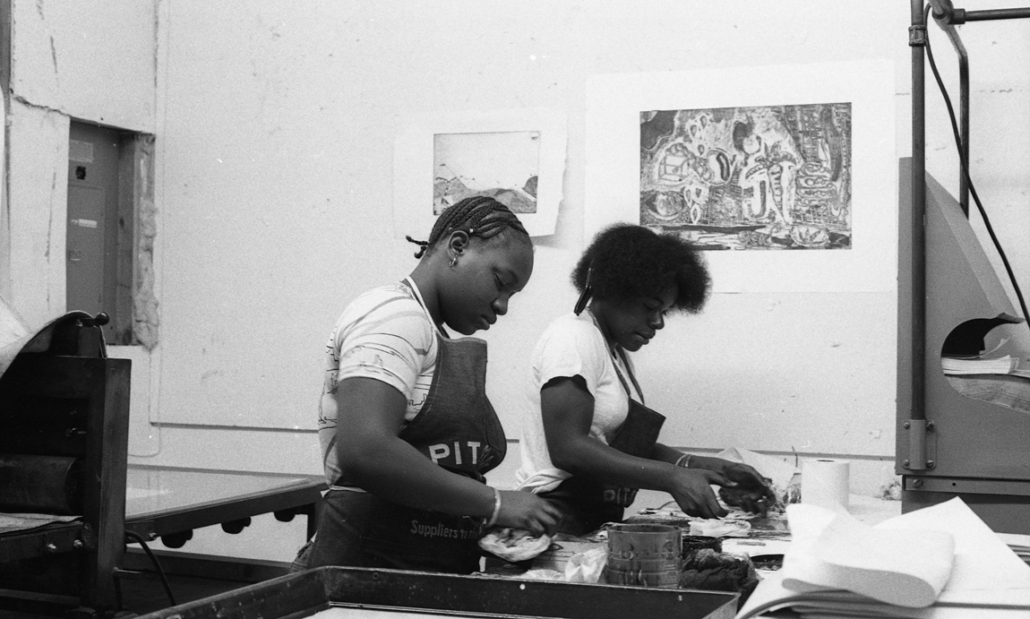
The Ben Wigfall Perpetuity Project honors and strives to continue the legacy of painter, printmaker, educator, and gallerist, Ben Wigfall (1930-2017), who mentored Black youth in Kingston, NY through his Communications Village.
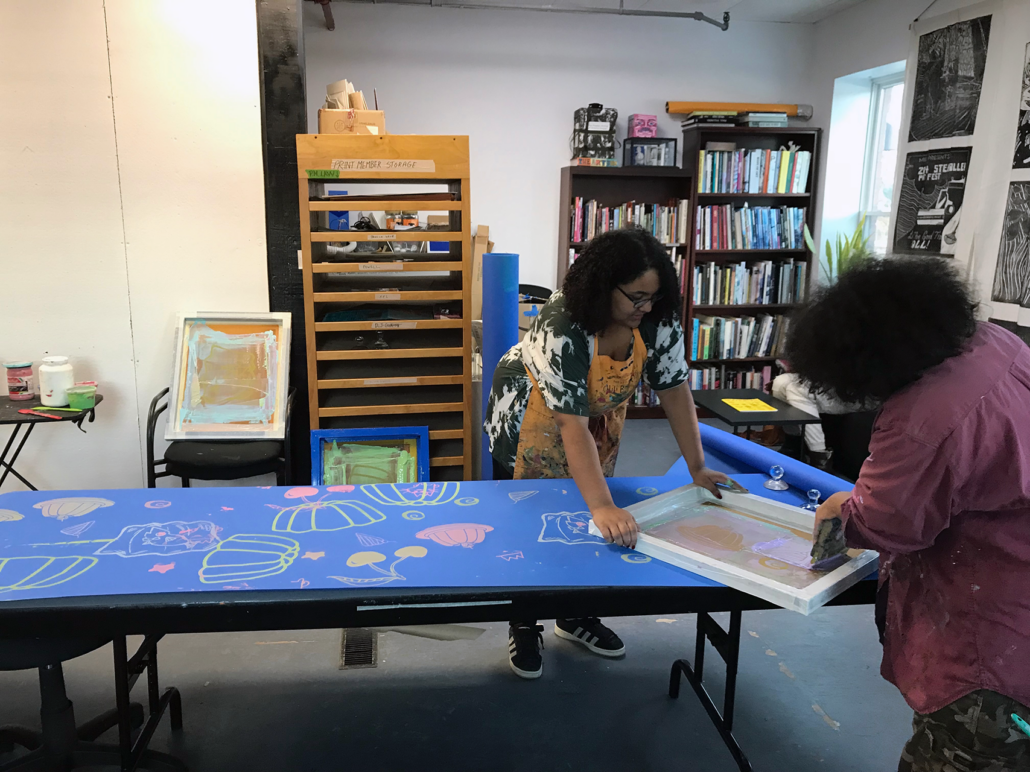
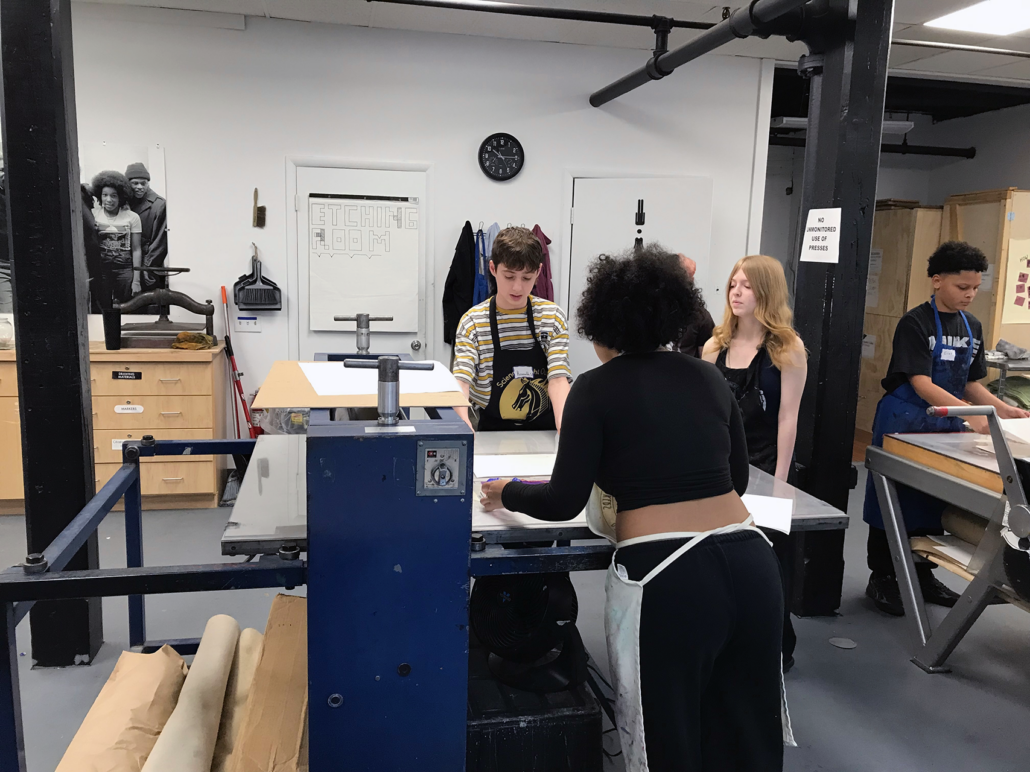
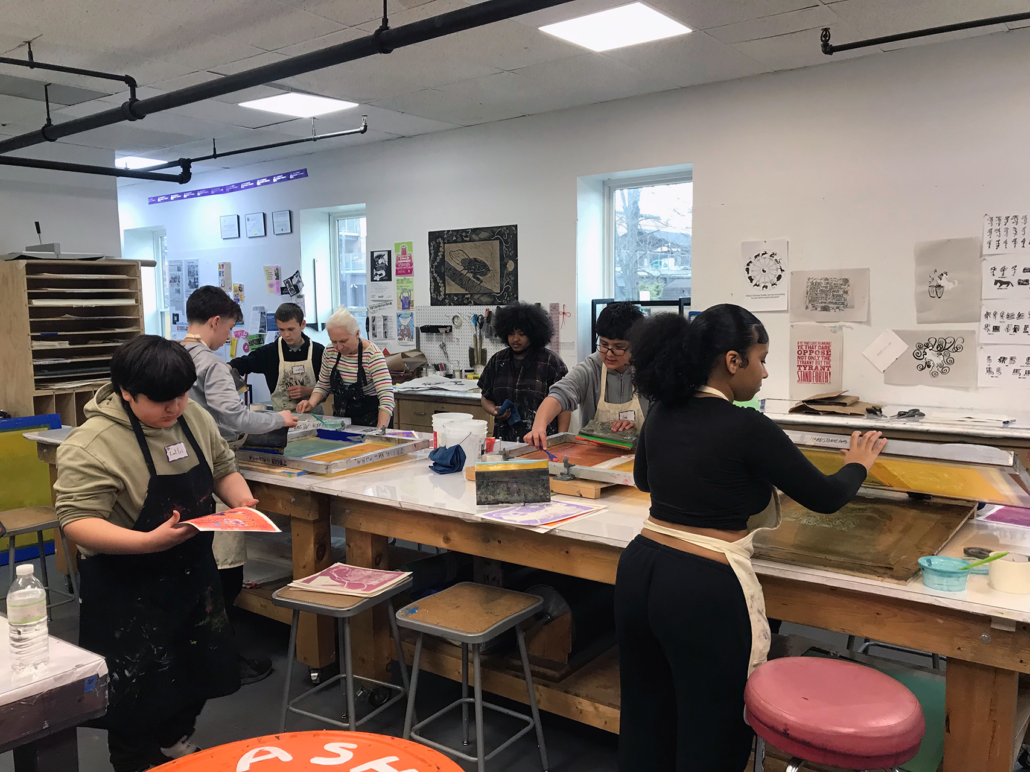
This program incorporates Youth Workforce (YW) Print mentorship through one-on-one training working on print editions, assisting local working artists, public school visits to Neighborhood Print Studio and program partner The Dorsky Museum of SUNY New Paltz, and our BIPOC residency collaborating with our YW. Incorporating our youth cohort in programming develops their communication skills, independence, and professional connections, continuously shaping their creative careers.
Wigfall’s Communications Village was a vital, community-rooted model of Black arts education. By centering his legacy in hands-on programming and inviting contemporary BIPOC artists whose collaborative spirit echoes his own, this program creates living continuity between Kingston’s history and its present creative community.
Who is Ben Wigfall?
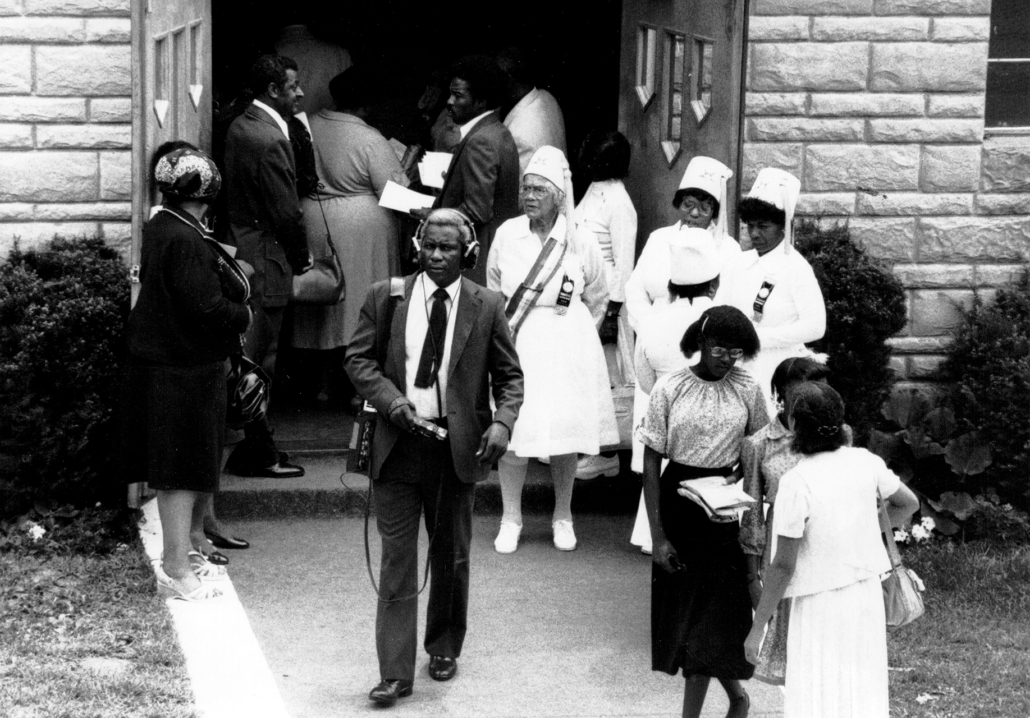
Benjamin Leroy Wigfall (1930-2017) was born in Richmond, Virginia. Wigfall attended art classes as a high school student at the Virginia Museum of Fine Arts (VMFA), which funded his college education at Hampton Institute where he got a BS in art education in 1949. His professors recognized his extraordinary talent and urged him to pursue graduate work. Wigfall went on to study at University of Iowa and Yale School of Design.
During the 1950’s, his artwork developed a national reputation. Although he continued creating art, he did not pursue an exhibition career, choosing instead the multiple paths of educator, community mentor, and gallerist.
Founding of Communications Village
Wigfall came to SUNY New Paltz in 1963 as an instructor of 2-D design and drawing. When he first arrived, he was the only African American faculty member on the campus. He served on committees to recruit students of color and in 1969 became one of the founders of the Black Studies Department (the second such department in the country).
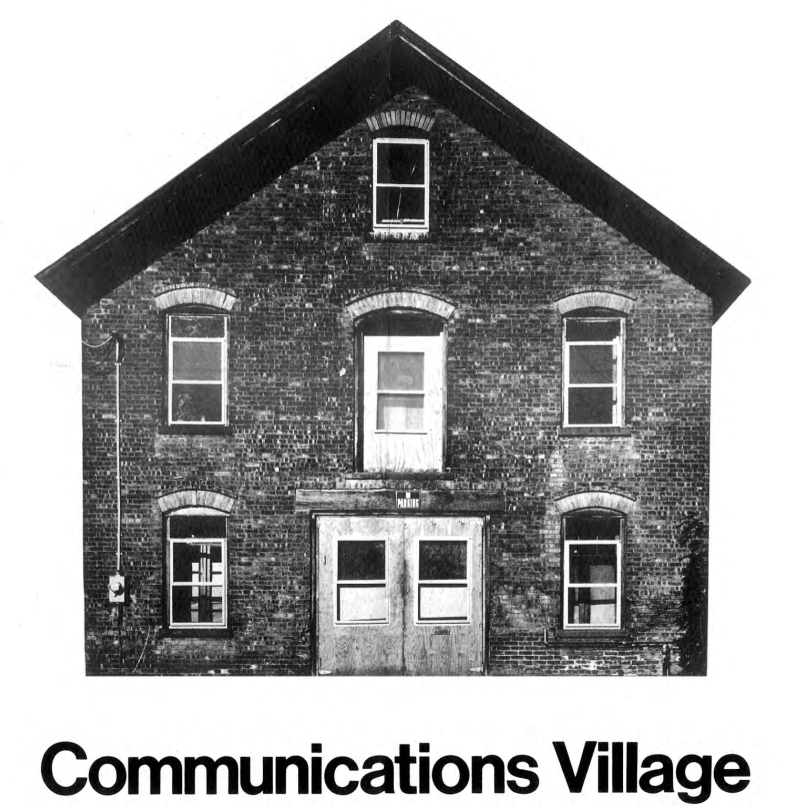
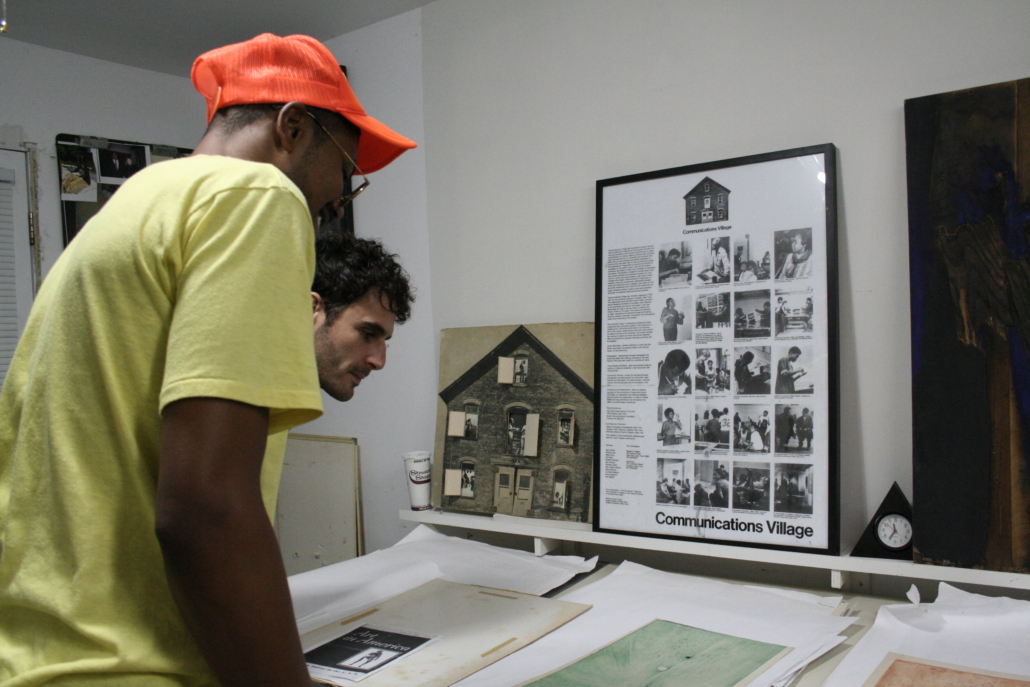
Dissatisfied with the lack of SUNY’s outreach to students of color, he bought an abandoned mule barn in the largely African American community of Ponckhockie in Kingston and started Communications Village in 1973.
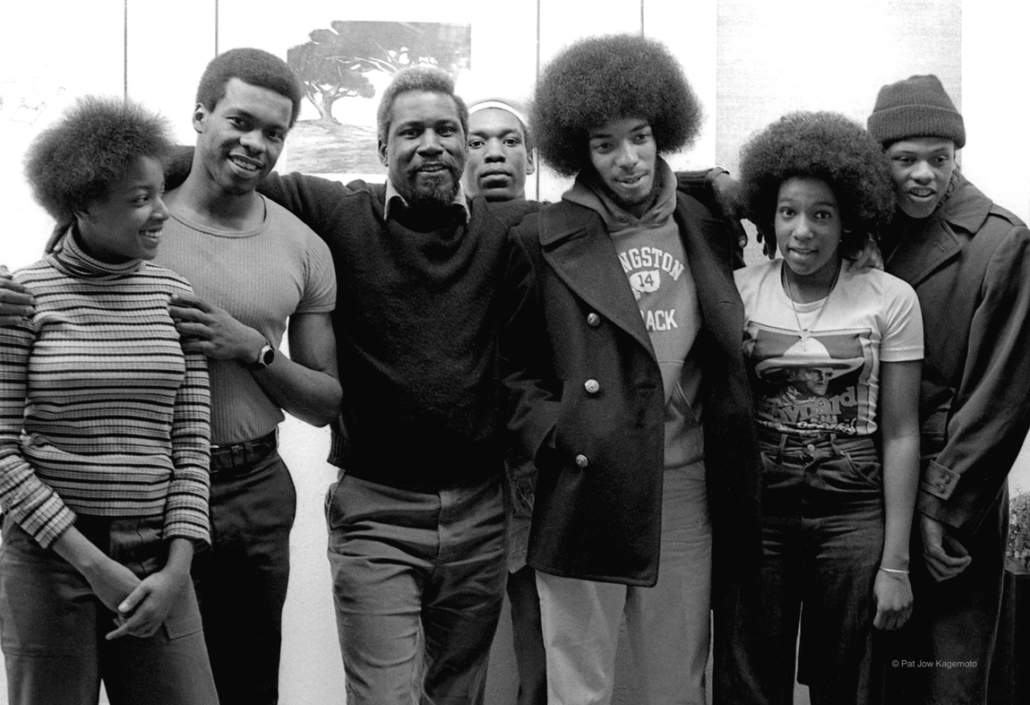
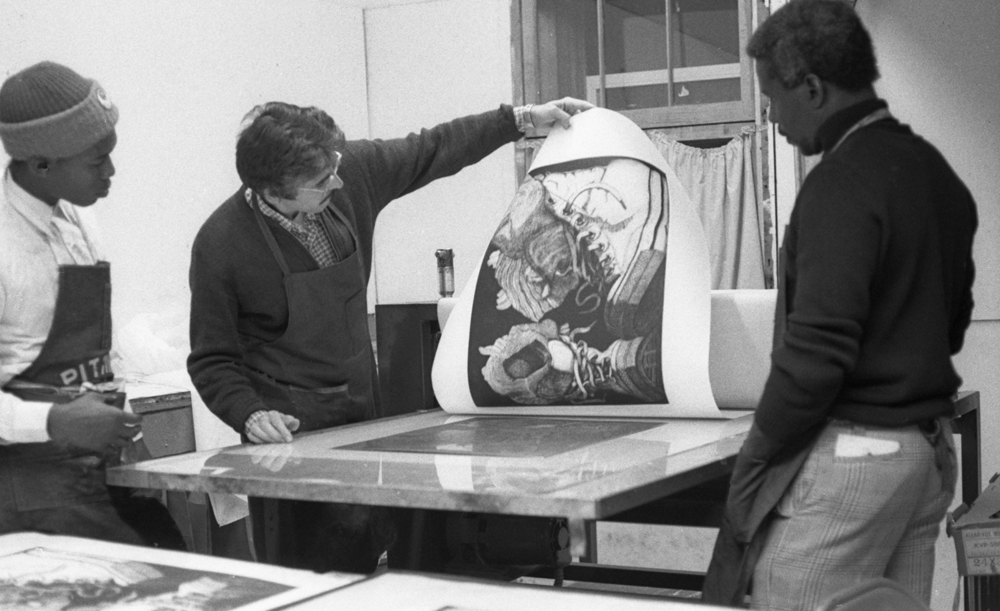
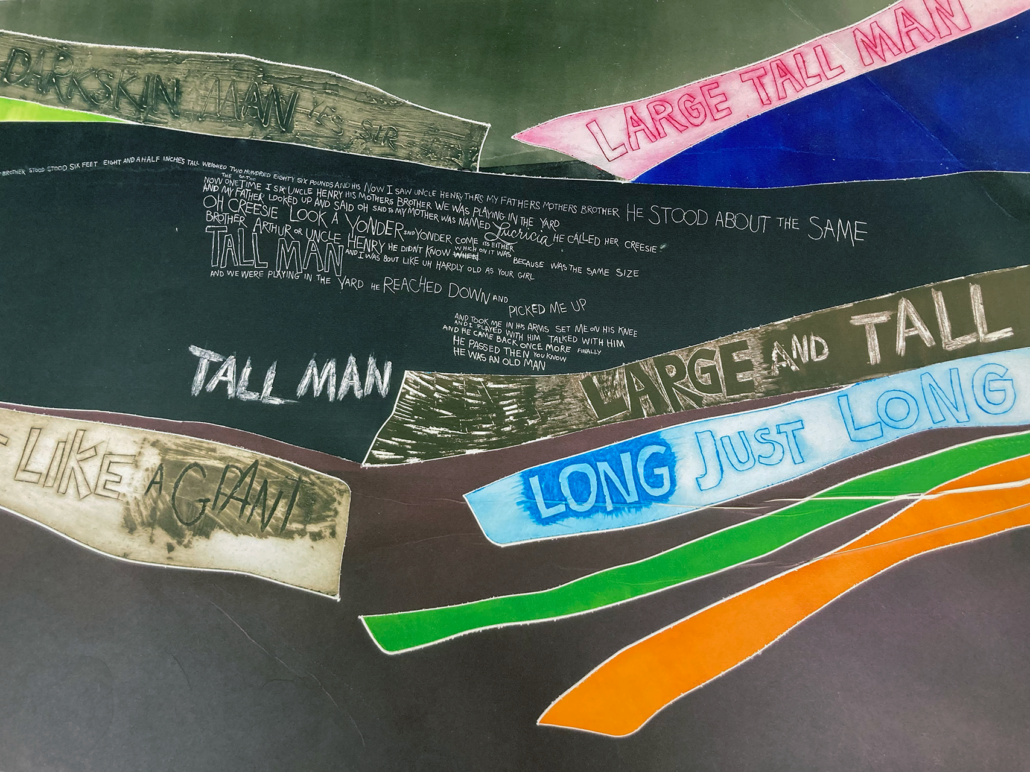
Communications Village quickly became an attraction for the neighborhood youth, many of whom had only a limited experience with art. Wigfall introduced them to printmaking, photography, oral history, and contemporary working artists. Wigfall saw communication itself as an art and a form of daily survival skills.
“Communications Village was conceived to explore formats which orchestrate traditional art and survival activities into one total expression.” – Ben Wigfall
Neighborhood youth received training as printing assistants and worked alongside the now legendary visiting artists whom Wigfall invited up from New York and Virginia. These included Romare Bearden, Robert Blackburn, Benny Andrews, Betty Blayton, Melvin Edwards, Jayne Cortez, Charles Gaines, Mavis Pusey, Ernest Crichlow, Ernie Frazier,Everett Winrow and Joe Gonzalez.
Communications Village reflected a shared ethos among many African American artists, which was the importance of working in direct relationship with their communities.
“There have been people…who have lived every day of their lives in the background, never comprehending what they were taking and all they were giving…[Wigfall’s] object was to reach those people, especially his Black neighbors, whose experiences have never afforded them the chance to feel relevant, to feel vitally alive.”
-Kingston Daily Freeman Article 1977 describing Wigfall’s motivation.
Communications Village lasted until 1983 after cutbacks from CETA, the Federal funding that had helped support it. From 1988-2008 Ben Wigfall began and ran the Watermark/Cargo Gallery in Kingston’s developing art community. The gallery continued Wigfall’s concern to promote African American artists, as he had done on the SUNY campus and in Communications Village.
Long after Communications Village ended its impact on the Kingston Community is immeasurable. Midtown Kingston started a program inspired by Ben Wigfall and began Neighborhood Print Studio. NPS began with the intention of being a meeting place for artists for accessible print education/facilities and a training ground for our Youth Workforce to build their skills in printmaking and collaborate with working artists. As stewards of Ben Wigfall’s press we want to emphasize the importance of accessible arts education in youth. Art is a survival activity and communication can have an inconceivable large impact on our community member’s lives.
“Communications Village seeks to provide new formats for expression by the public in such a way that the vitality, profundity and beauty of their lives is revealed to themselves and society.”
What We Do
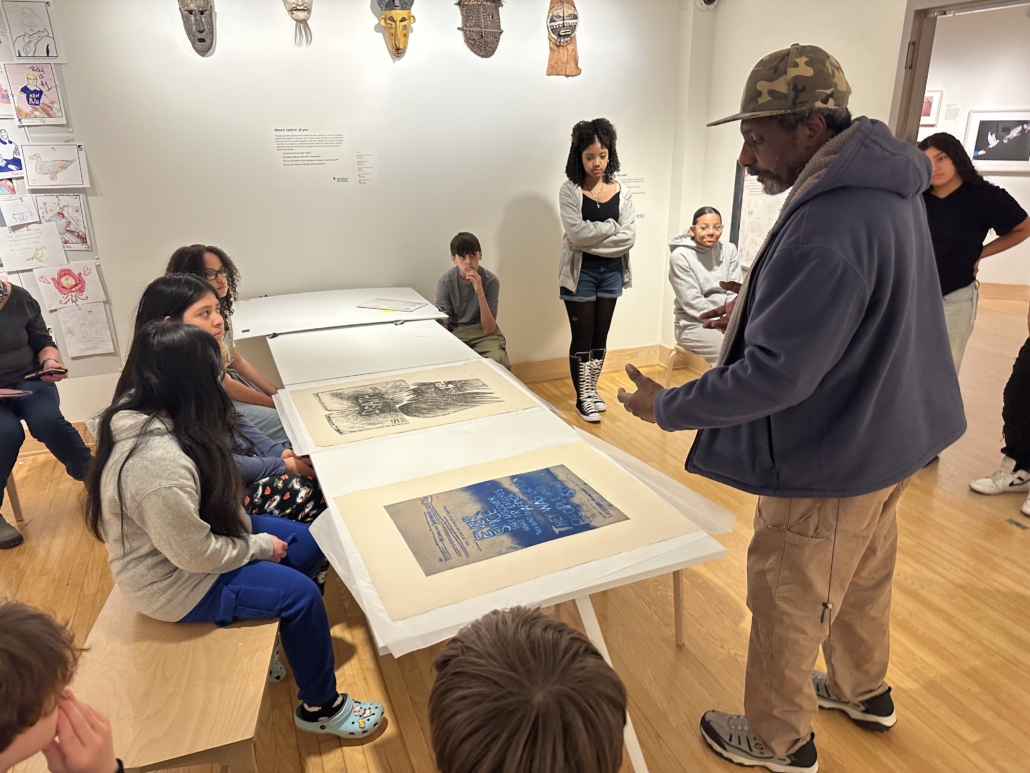
Public School Visits
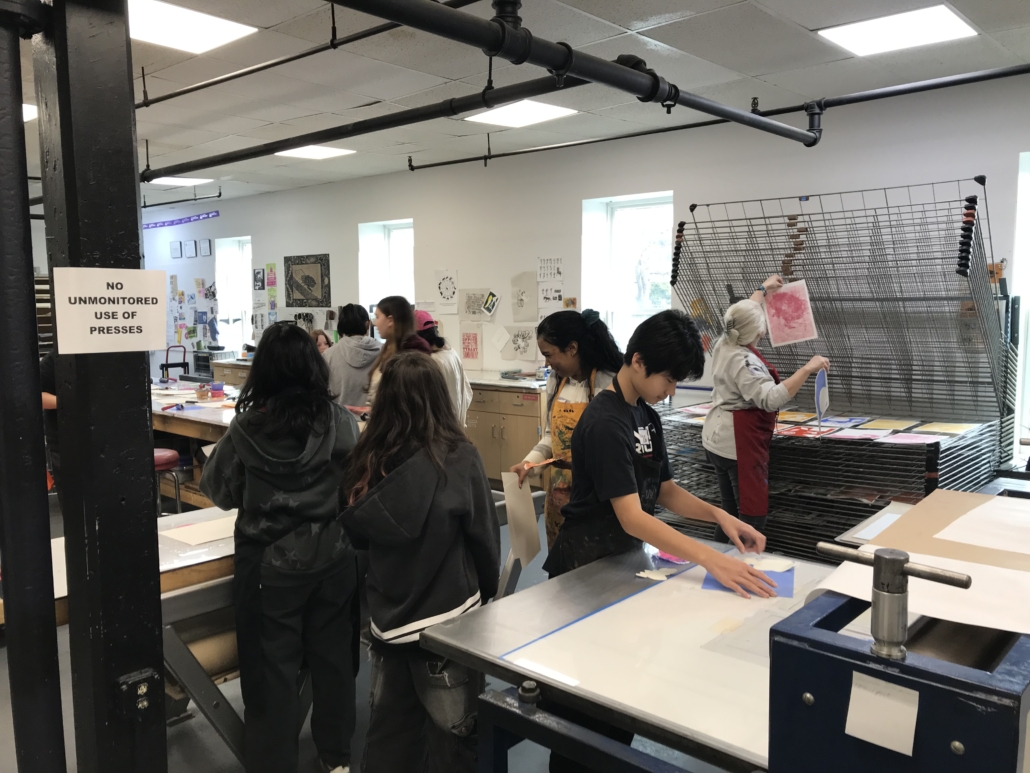
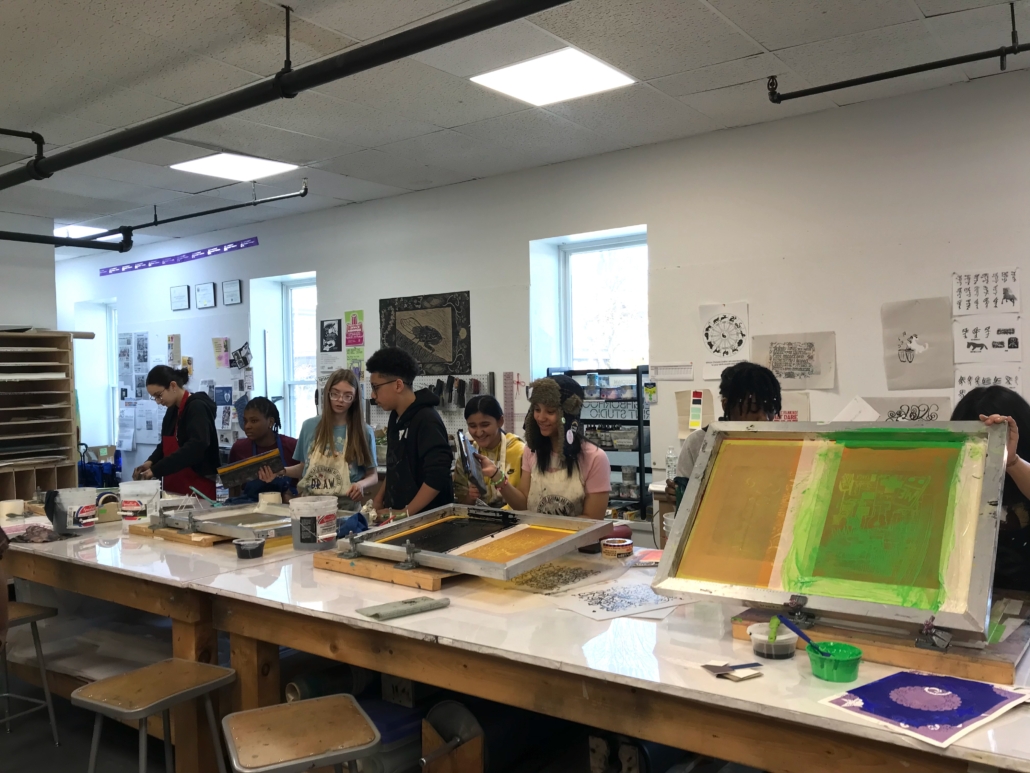
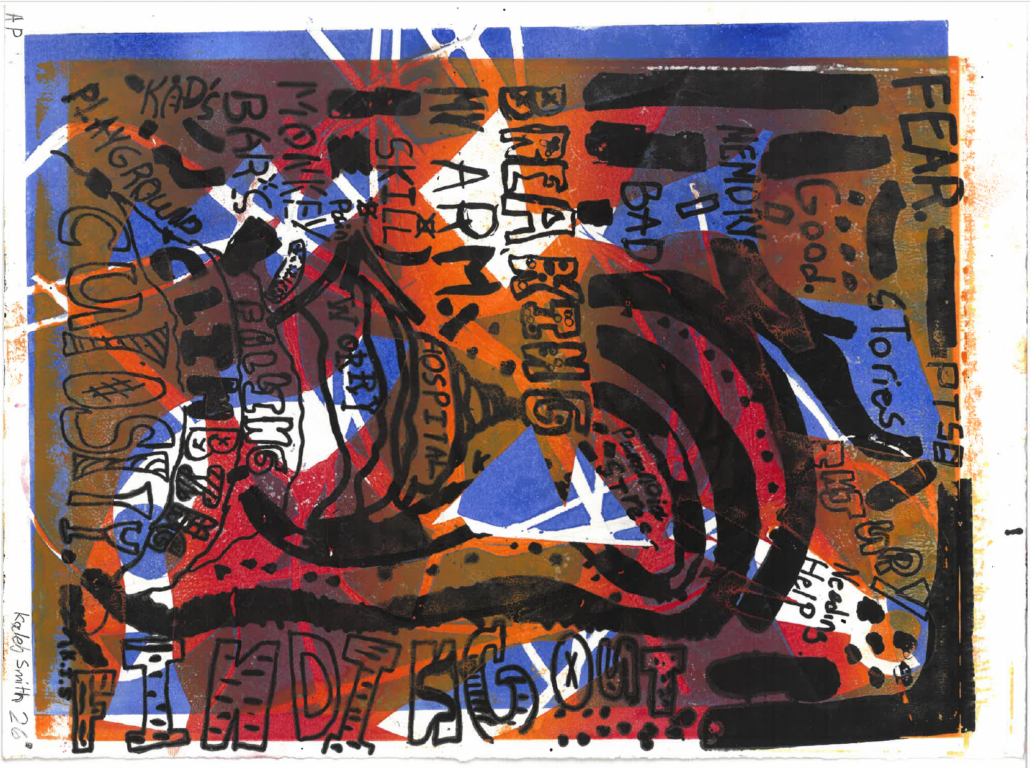
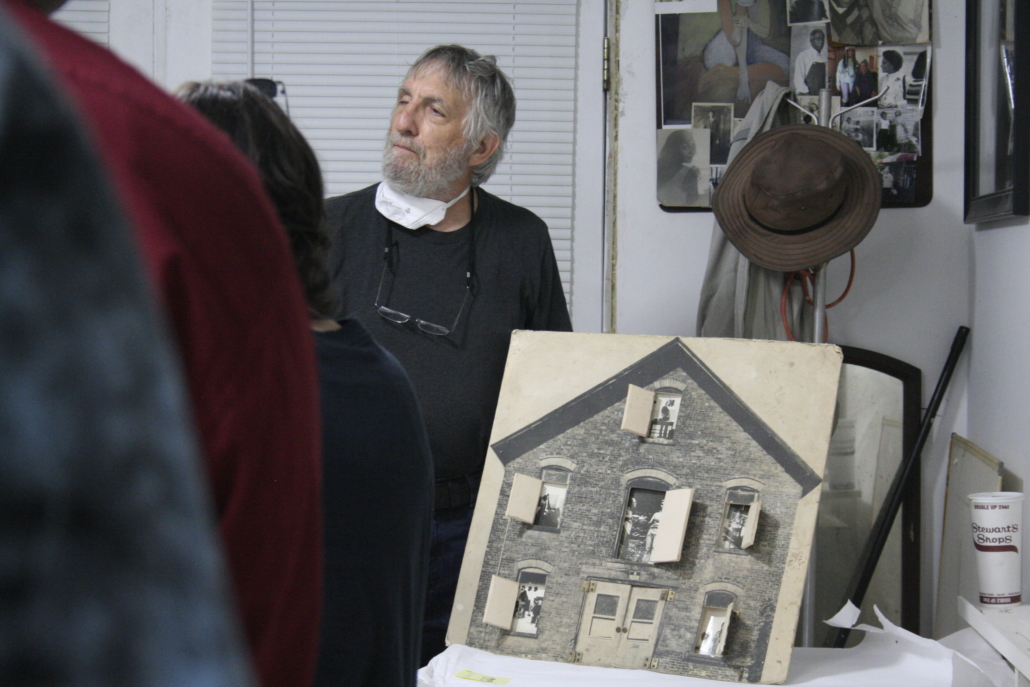
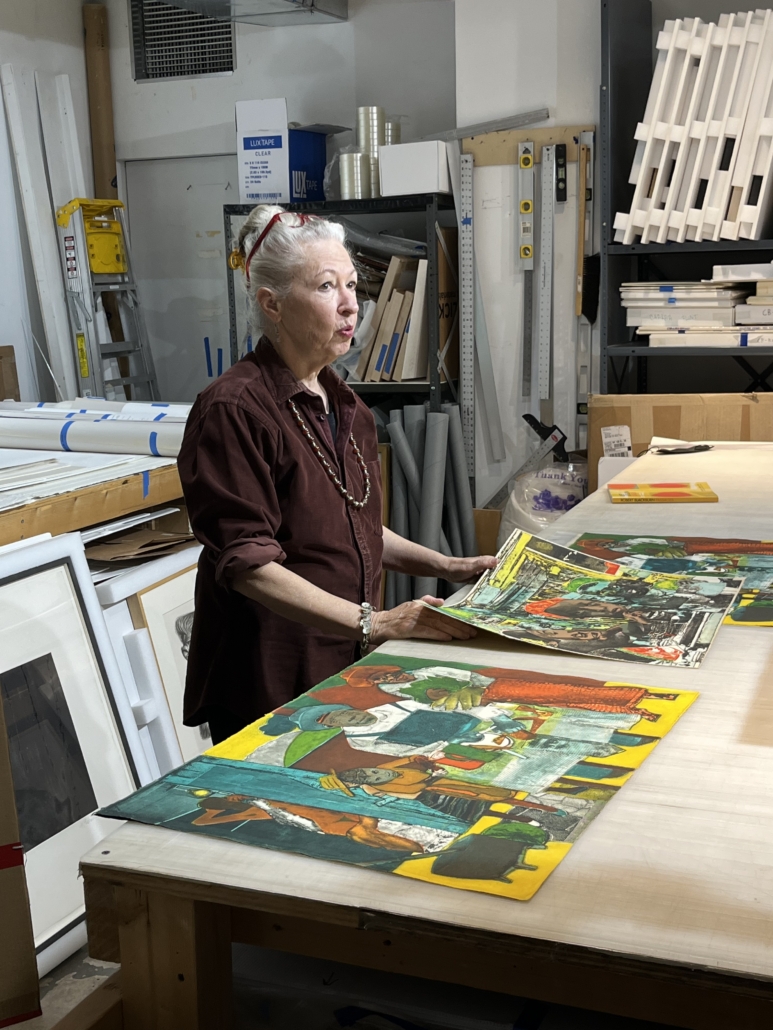
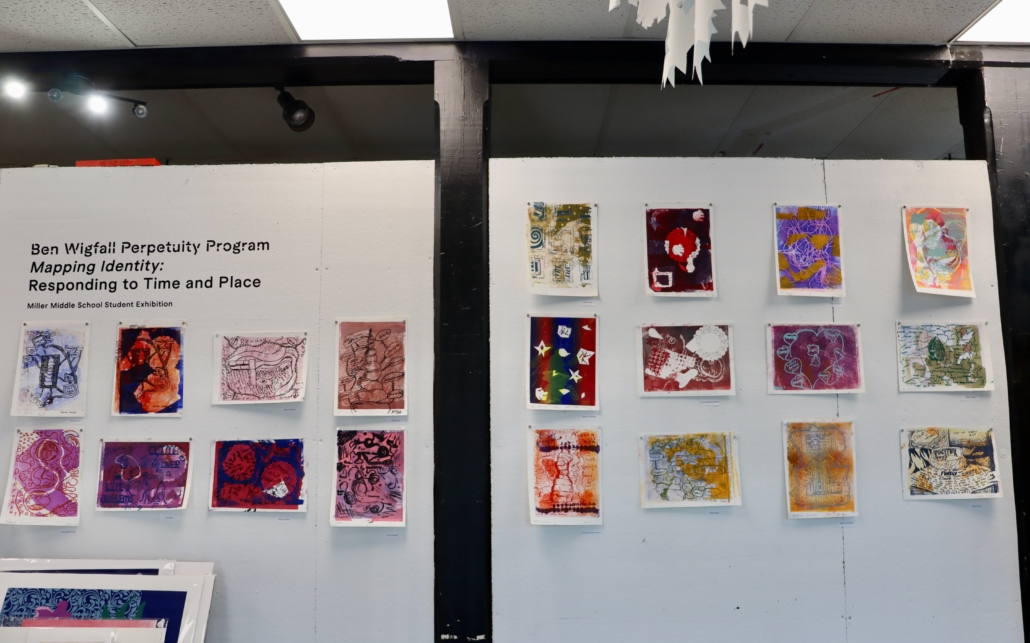
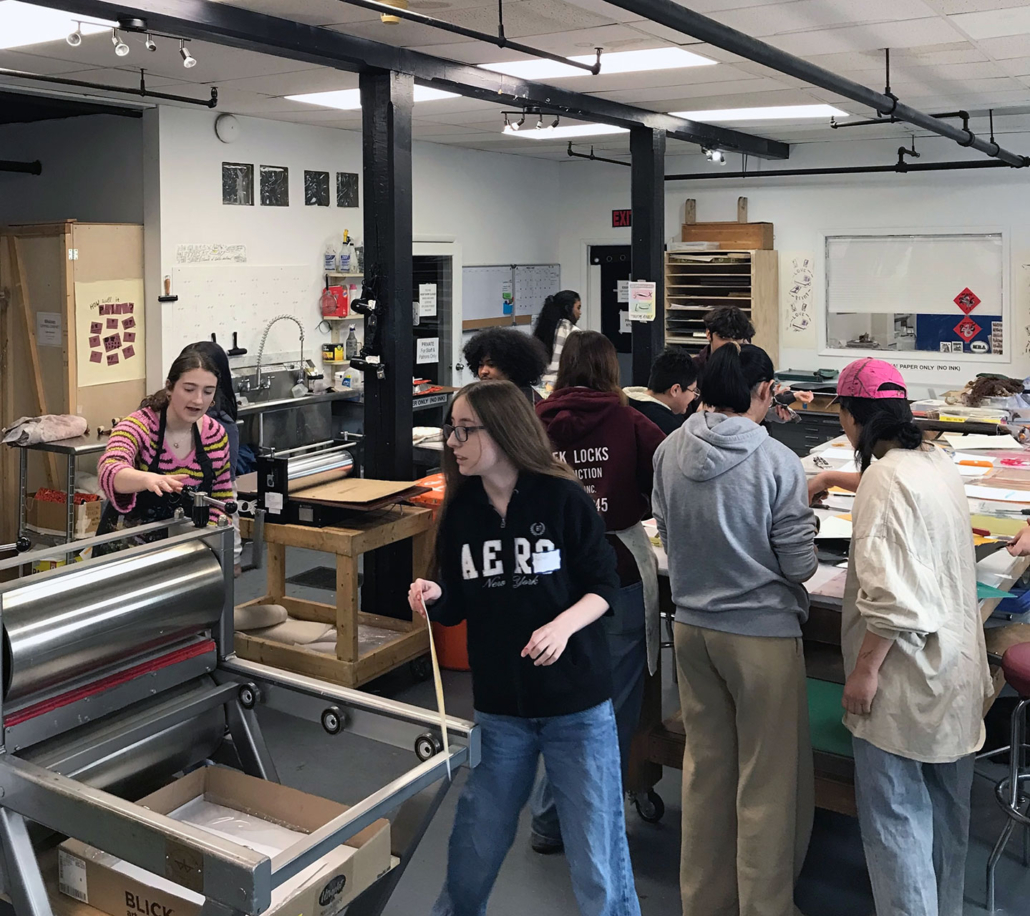
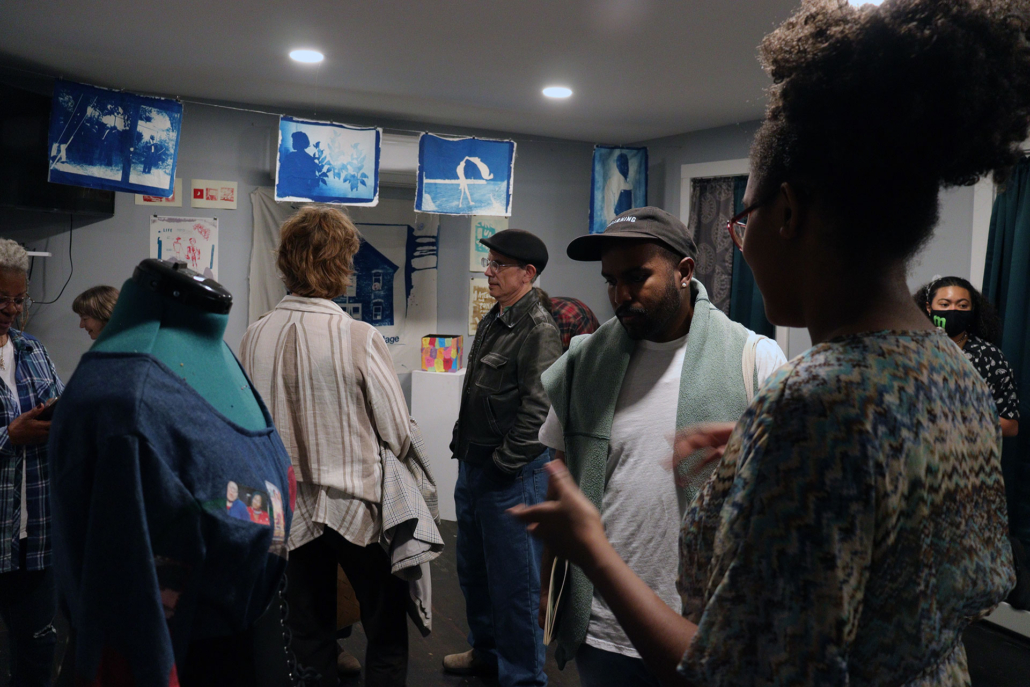
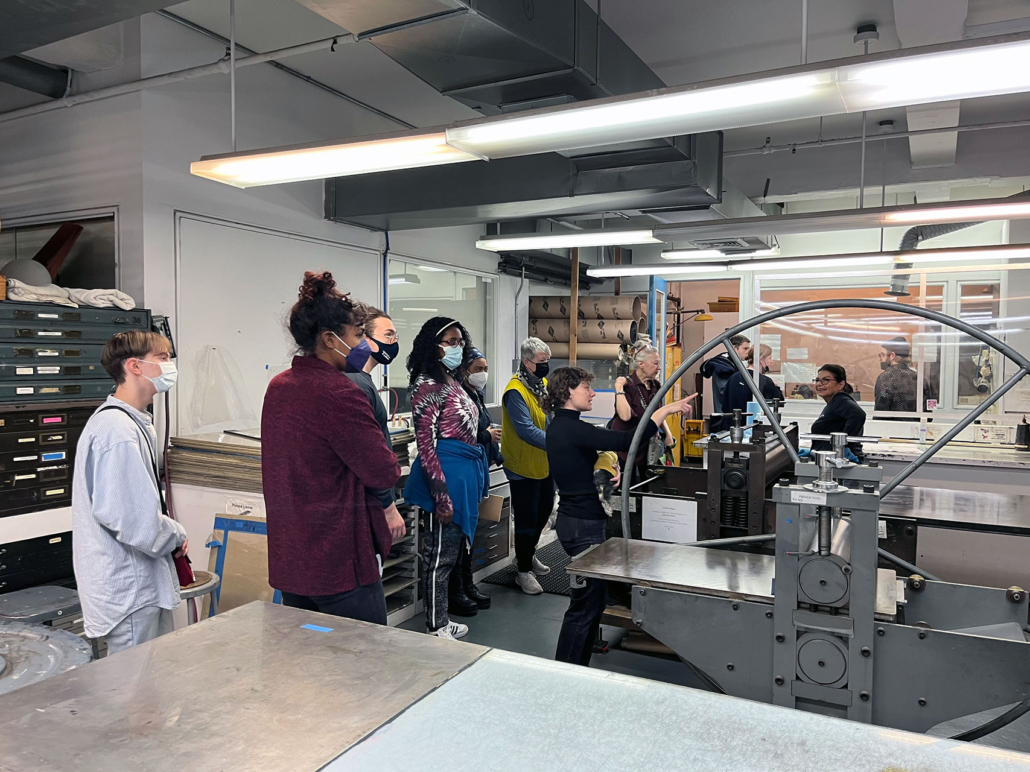
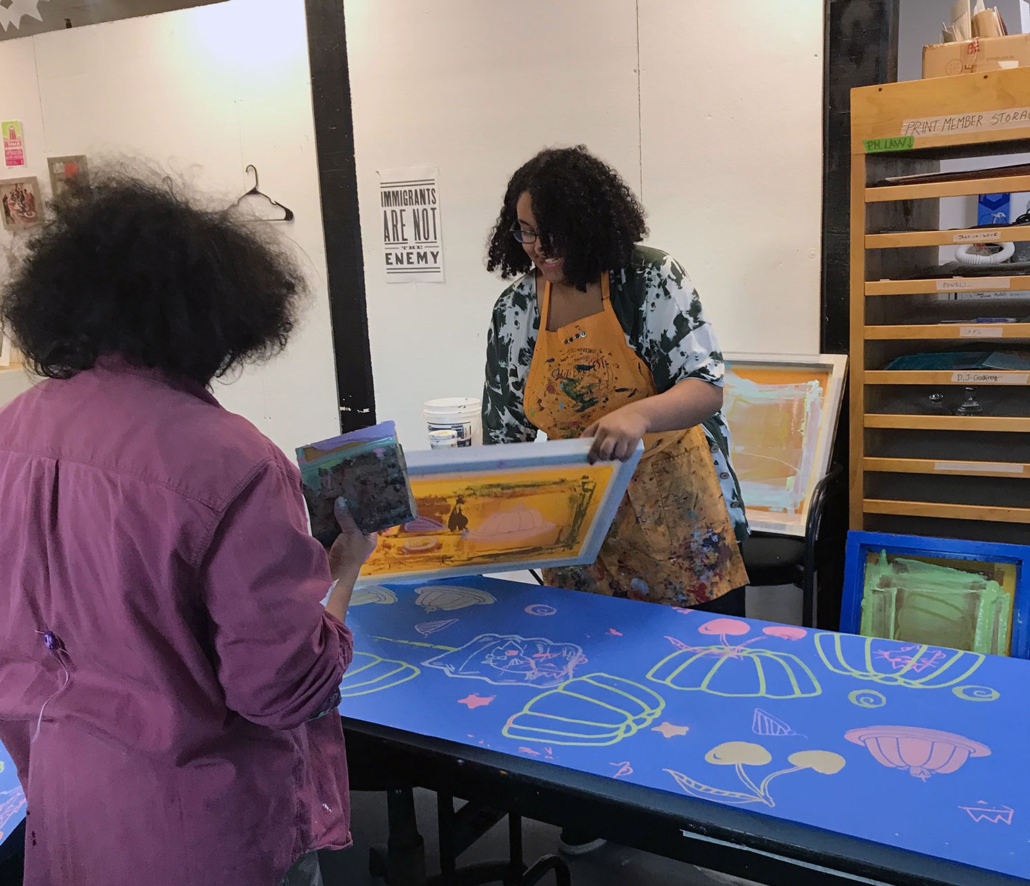
For 3 years and counting, NPS has invited 40 Miller Middle School students to visit The Dorsky Museum and research Wigfall’s art practice. Art educator Patty Tyrol incorporates a theme for the students to create their own print editions at NPS. These student editions of monotype/silkscreen prints are later exhibited at The DRAW Gallery or Print Studio. Oftentimes students from our public school visits later return to be a part of the Youth Workforce program.
Youth Workforce Print Training
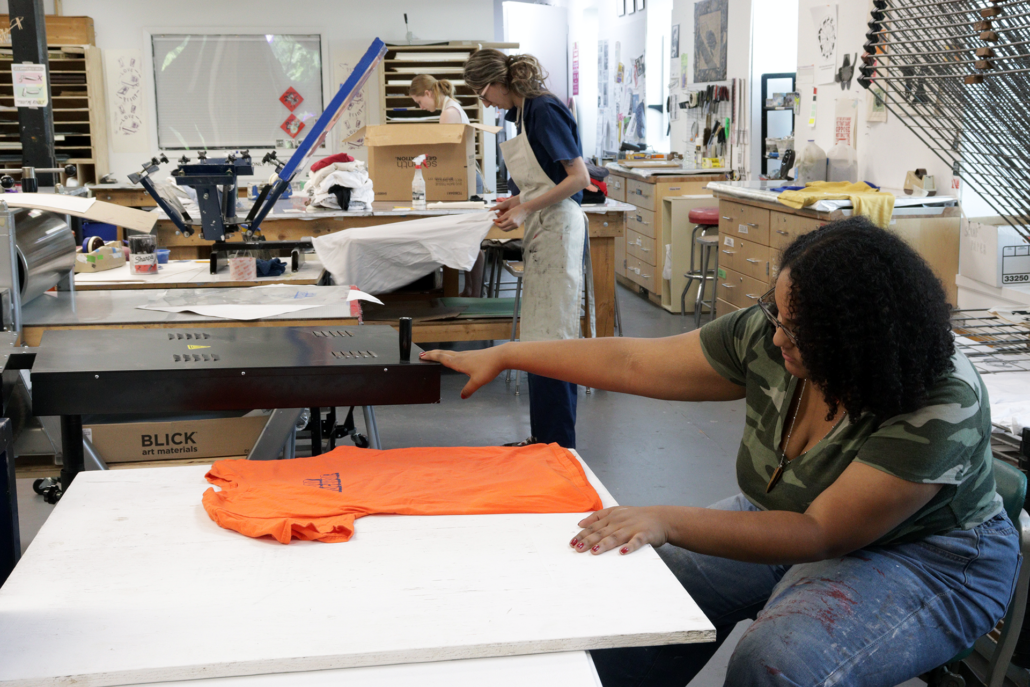
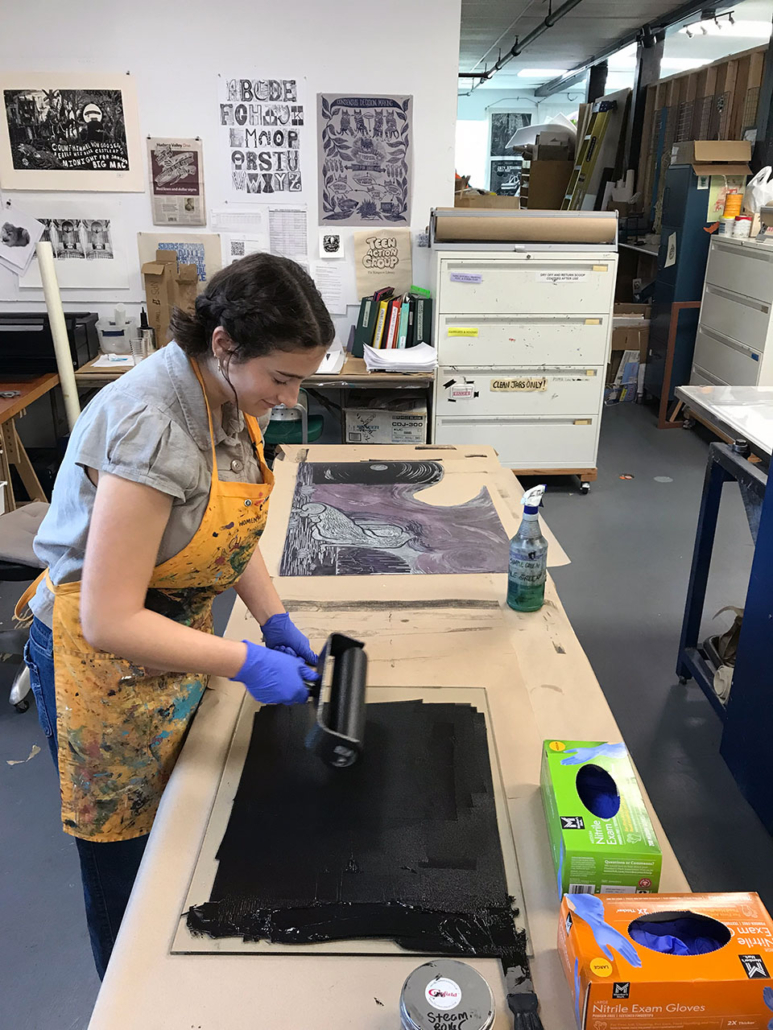
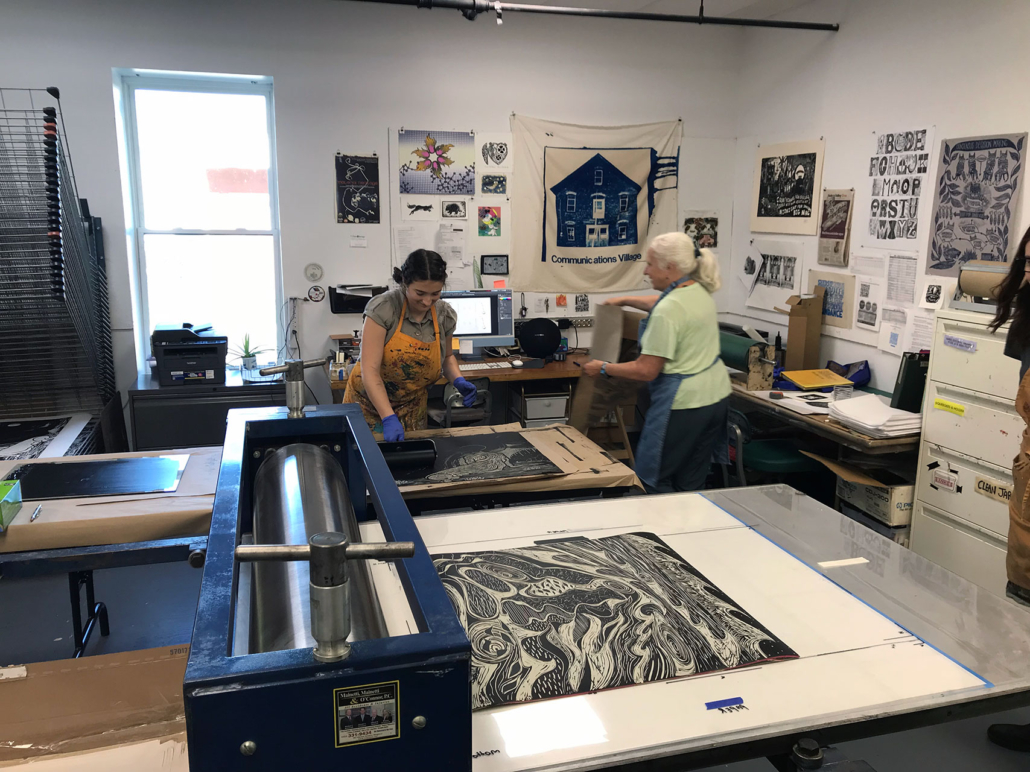
A cohort of Youth Workforce students receive print training at NPS through completing work orders, assisting teaching artists, community events and working on individual projects facilitated by the NPS Director—ensuring that this cohort is ready to advance to a new level to take on roles as print and teaching assistants for Artists-in-Residence and help lead public school visits modeling for and leading the newer cohorts.
Artist Residency
Each year NPS has an open call for a BIPOC Artist-in-Residence chosen by a jury of local artists. The visiting artist joins us for 2 weeks, taking over our back studio connected to our community print studio, to work alongside our Youth Workforce (YW) cohort to produce a collaborative fine art print edition. The residency includes an honorarium, materials stipend, housing, and a solo exhibit in the DRAW Gallery. Residents also participate in public open studio hours, school visits, and a free-to-the-community public artist talk. This program seeks artists that have experience in printmaking, working in a collaborative community setting, and have teaching or leadership qualities to be able to work with teens as a mentor.
Youth Workforce Collaborations
YMCA Farm Project
Broadway Bubble
Rewind Kingston
Common Waters Futures/Watershed Project
Youth Workforce Print Editions
Headstone Gallery x Richard Bosman Fine Art Edition
Kingston Independent Comic Expo (KICX)
The Kingston Artists Soapbox Derby
Dromdary Fest 2025 & 2026
Kingston Land Trust
Woodstock School of Art
Good Neighbor
O+
Why is this Important?
Wigfall’s Communications Village was a vital, community-rooted model of Black arts education. By centering his legacy in hands-on programming and inviting contemporary BIPOC artists, this program creates living continuity between Kingston’s history and its present creative community. Program advisors who studied under Wigfall at SUNY New Paltz and Communications Village, with ties to the Black communities in the region, ensure this knowledge is passed forward authentically for Kingston’s youth. Seeing their community’s history reflected in professional practice is a form of cultural affirmation no traditional classroom can replicate.
Ben Wigfall’s own career was shaped by the inequities Black artists still face: major museums remain roughly 85% white in their displayed collections, Black creators are pressured into narrow racialized expectations, and even established Black artists are often labeled “emerging” well into mid-career—undermining their standing and market value. Wigfall primed young Black artists to counter this, and many have gone on to lucrative careers. The living memory of Communications Village is held by advisors whose firsthand knowledge is irreplaceable; this program ensures Wigfall’s contributions to Black arts education in NYS are recognized and carried forward.
Program Advisors
Advisors include Kingston Arts Commission co-founder Richard Frumess, Lara Giordano, Anna Conlan, Marielena Ferrer-Harrington, and Patty Tyrol. The Ben Wigfall Estate, led by Gino Wigfall, continues to provide guidance on preserving and interpreting Ben Wigfall’s artistic legacy. Partnerships with the Samuel Dorsky Museum of Art, Kingston City School District, and the Robert Blackburn Printmaking Workshop provide additional scholarly, educational, and institutional support. This project aligns with the City of Kingston Master Plan strategy to ensure that all Kingston residents have access to affordable arts and cultural programming.
Wigfall Legacy Coalition
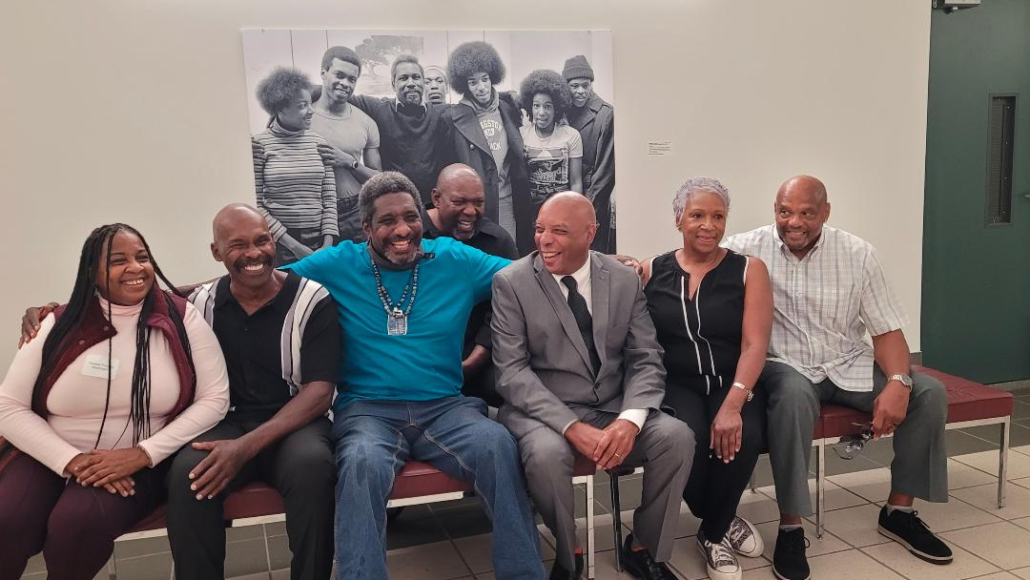
Dina Washington (original Communications Village youth, 4th generation Kingston resident), Esi Lewis (Executive Director of the Dr. Margaret D. Lewis Center for Black History and Culture, 5th generation Kingston resident), Maggie Inge (co-director of Kingston Land Trust), Maureen Blue (Board member, A.J. Williams-Myers African Roots Center), Drew Andrews (Executive Director of Center for Creative Education), Jessieca McNabb (Radio Kingston host, 5th gen Kingston resident), Paul Sturtz (director of Upstate Films), IONE (Kingston elder and author of Pride of Family: Four Generations of American Women of Color), Patty Curry (Student of Ben Wigfall), Taylor Bruck (Ulster County Clerk and historian), Eddie Moran (City of Kingston Historian), Kitt Potter (Kingston Arts and Cultural Affairs Director), and Brian Wallis (Director of Center for Photography Kingston CPW).
Ben Wigfall Sources:
Virginia Museum of Fine Art
Ben Wigfall & Communications Village by Sarah L Eckhardt and Drew Thompson
Radio Kingston Series on Ben Wigfall
Partner and grant funding logos go here:
Arts and Culture Grant
The Dorsky Museum