A Conversation with Maxine Leu
A Conversation with Maxine Leu
By Cora Secore
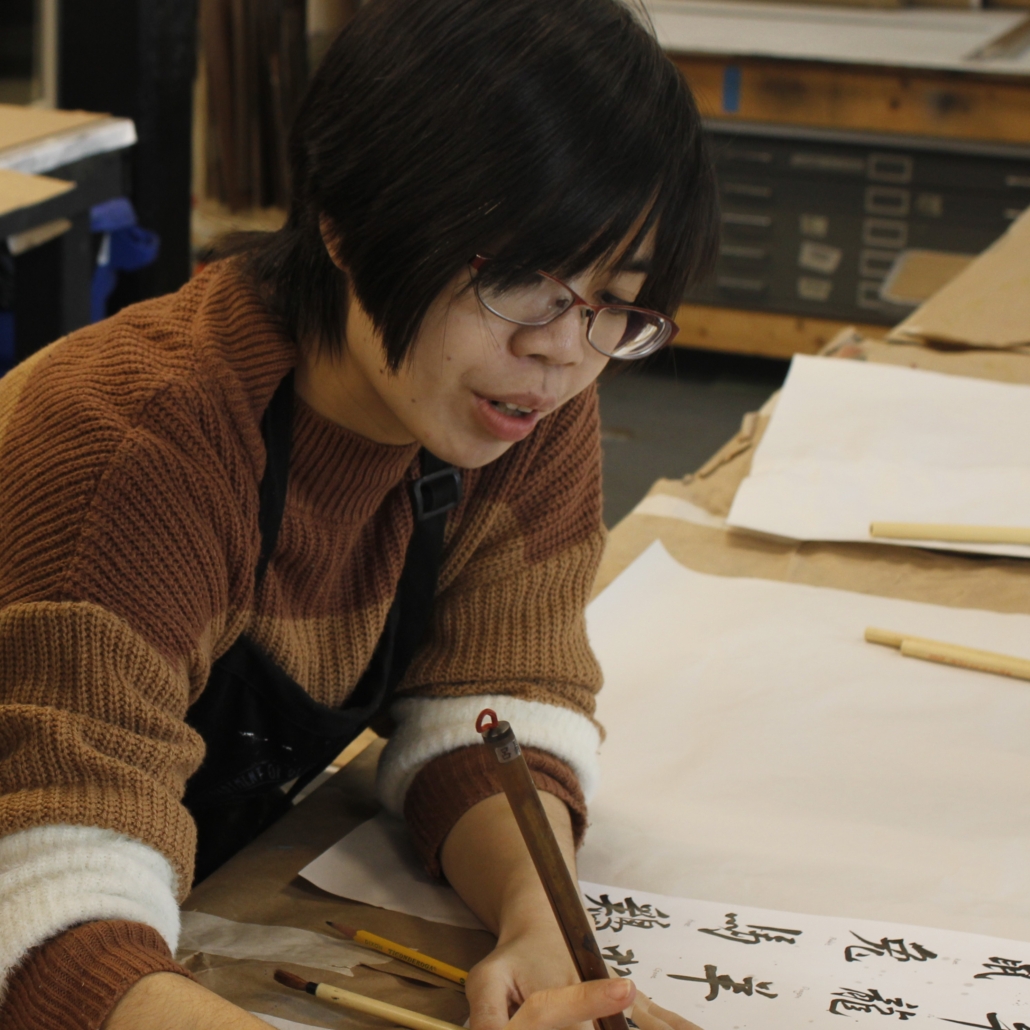
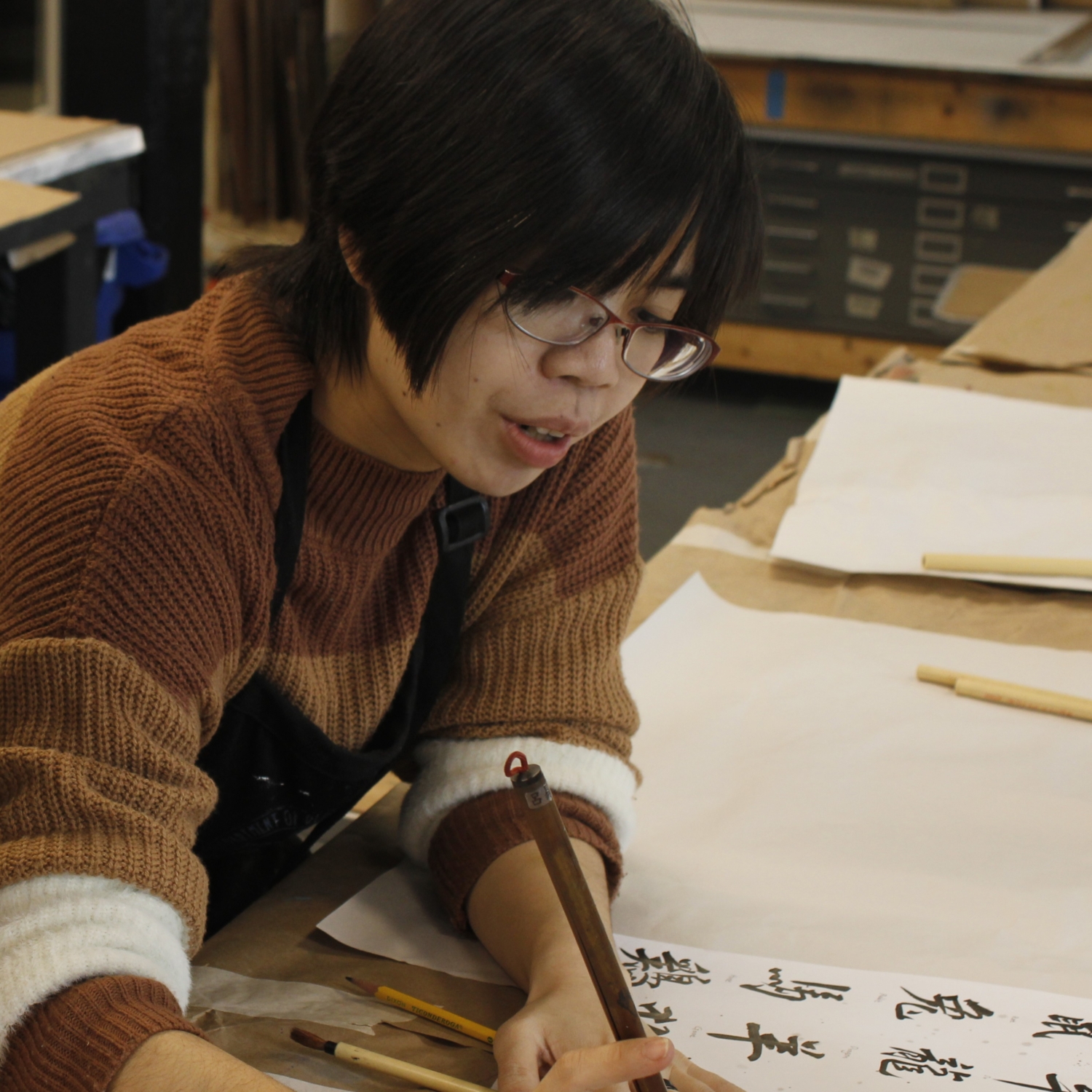
On October 4th, 2026, I interviewed Maxine Leu. She’s been a longtime major supporter of MKAD in multiple facets. Maxine is an art educator, the producer of Eco Arts Week, and my mentor when I was transitioning from the Youth Workforce to an MKAD employee. Her approach to work and art has always been incredibly inspiring to me, so every chance I get to sit down and pick her brain is a treat. Much of what’s valuable to MKAD is directly reflected in Maxine’s own role here, including the new classes that she’s teaching.
“I work as an artist and I also have a job as an Instructional Support Technician at Purchase College,” Maxine introduced herself for the interview, “I’m also the teaching artist/producer for Eco Arts Week and events with Chinese culture like the Lunar New Year.”
Maxine has been getting involved with teaching several new classes lately in an exciting time for our offerings, and that comes from a broad experience of teaching with MKAD. “I started teaching with The DRAW back in 2020,” Maxine described her teaching history to me, “I started with open printmaking studios, but today I’ve switched gears to drawing and painting, particularly for water-based and dry mediums. The oncoming class I’m holding is 3D Printmaking, where we’re going to do printmaking on three-dimensional surfaces. Currently, I’m holding portrait painting and still life drawing classes.”
I asked Maxine what some of her favorite classes were to teach in the past, inspired by her experience. “This is a really hard question!” Maxine replied through her pondering, “You know, an interesting thing is that we meet people from the neighborhood or sometimes people who traveled from far out of state. Even if you teach the same class or series of workshops, you still meet different students. It always feels like a completely new experience. And also, classes usually focus on solid skill sets. Since our audience is from all different kinds of backgrounds, sometimes someone comes in wanting to work on a project they have. I adjust my teaching style based on the individual.
“As for a special class, I have to mention Eco Arts Week! That week is really special as a time for different artists to come and teach, but also follow through on the sensibility practice. I feel like during that week we get to really focus on sensitive topics. I say special because to me, talking about environmental issues does not go from one thing to the other. It’s not artist-centered, it’s more student-centered. Sometimes you learn much more from what the students deliver to you. One time we had a scientist come in for Eco Arts Week and they had very little background in the arts, but they came up with a very unexpected drawing that I never thought about coming from someone with an arts background. I enjoy those kinds of things, where there’s no expectations or right answer. I like a little open-endedness, and when a student walks out of a class thinking more about what they can do or might have forgotten.”
“MKAD is a really special place compared to other art centers,” Maxine described more about her relationship to MKAD and how she really exercises what we’re capable of, “I am completely supported by the organization, not just through supplies, but also culturally. I don’t consider myself a majority race around here. Here, I’m able to propose something that’s completely related to my culture or something that usually wouldn’t get a lot of attention. Here, they don’t tell me what to teach! It’s a collaborative relationship between artist and organization that makes me feel completely comfortable to propose. The first time I proposed a Lunar New Year event, other staff members at the time didn’t know about the tradition, but they were excited and still wanted to learn! That made me feel like, ‘Oh! I belong in this place, even if I’m an outsider.’ It makes me want to share more.
“I think that’s a magical part of teaching here. Sometimes, there’s a thing that I feel, ‘Oh, I know we teach this way, but I want to introduce a little bit different approach,’ and they’re always comfortable with that. Sometimes the audience is dealing with something very hard, like today I had two students where they felt like it was a little painful to draw proportions on a portrait. By the end of class, they found a real skill that they were looking for and can practice. I’m really enjoying not only teaching, but also receiving from the students.”
I really enjoyed how much Maxine kept her mind open, which led to my next question. I asked her what class she would want to teach if she could teach anything at all. “Oh! Okay, I want to bring a crazier thing,” She replied emphatically, “In our studios, the majority of the things we have are drawing, painting, printmaking, two-dimensional art supplies. I feel like I would try to bring something special like sound, performance, installation, sculpture, those kinds of things across from the two-dimensional field. Those kinds of things are things I get excited about, like how far we can go from here. You know, there’s a ton of events like the DRAW-A-THON or the O+ Festival that demonstrate how much we can do. Me, personally, I work across fields. So like, sculpture… things, installation things, those are things I’d be really excited to do here!”
Maxine had prepared her personal definition of an artist ahead of time and I was excited to hear it. “I think an artist is the combination of a craftsman and a poet,” She told me, “If you only have the emotional side, that’s just a crazy person. If you only have the skill side, you are just a craftsman. But if you combine those together, you process your emotional side through the form and bring the issue or connection to the world. I feel like that’s what artists do.
“As for the form, it’s not just like someone writing a poem or drawing or taking photos. There’s whole art forms you can express yourself through. Artists see the world through senses first. They don’t see the world immediately for what they design for. I feel like that sensitivity is what brings artists to show hidden beauty or hidden questions that people would easily forget.”
Last year, I had asked Maxine about her relationship with Kingston and art. During this interview, I was still able to find so much more about her philosophy and approach to art and teaching. I can confidently recommend any of Maxine’s classes and workshops and remain eager to see what work a mind like hers produces in the future. Maxine can be found on Instagram @maxineleu and her website maxineleu.com.