A Conversation with Madeleine Cutrona
A Conversation with Madeleine Cutrona
By Cora Secore
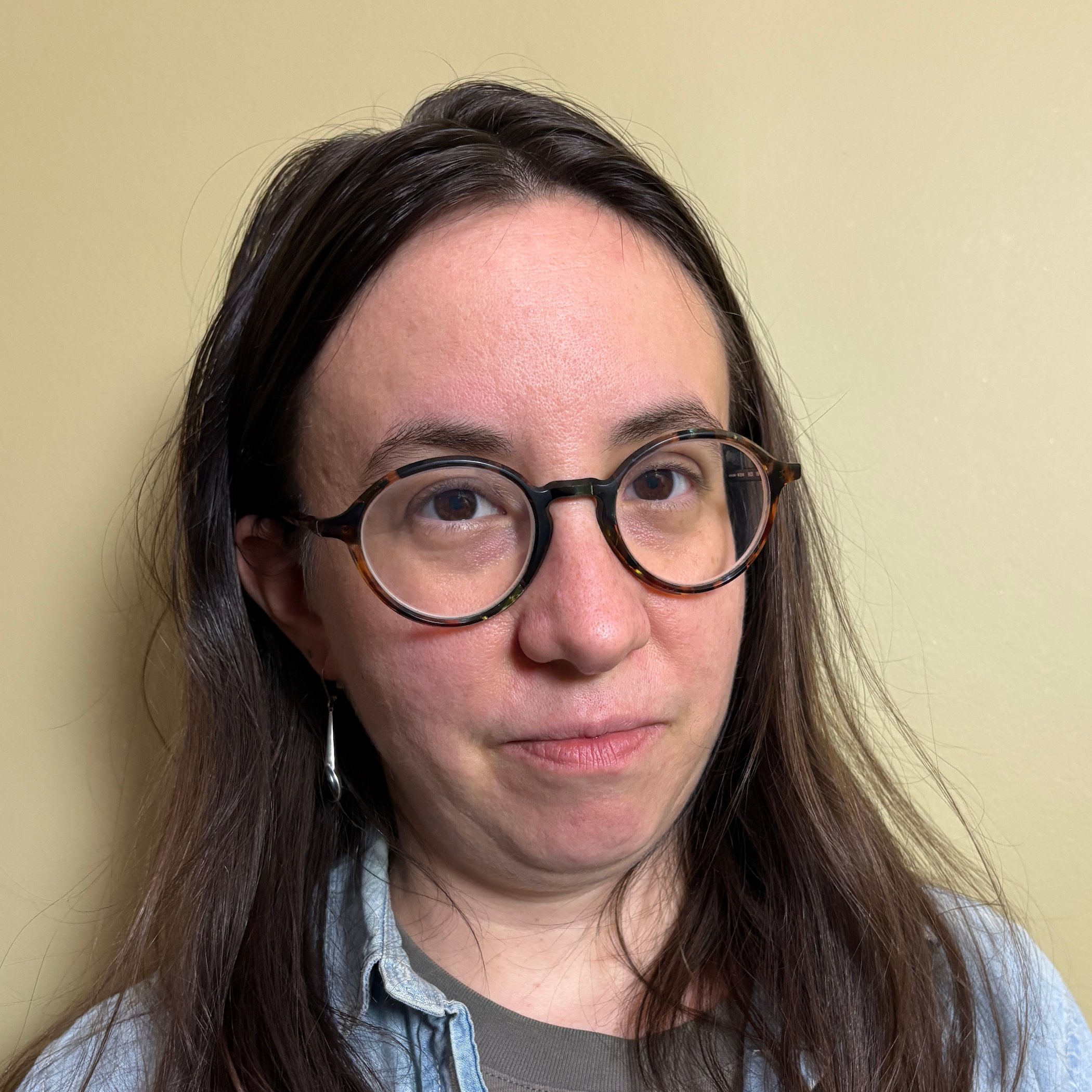
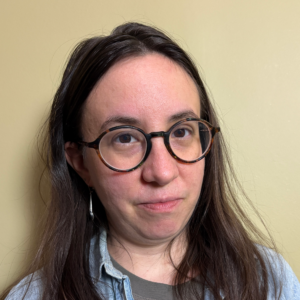
On July 22nd, 2026, I met with the Vice President of MKAD’s Board of Directors: Madeleine Cutrona in the Neighborhood Print Studio. She is not only an important figure in our organization, but also in other arts organizations across Kingston. Through extensive efforts in collaboration, Madeleine has gone a long way in magnifying the local arts and contributing to its health.
“I’m an artist and an administrator,” Madeleine introduced herself, “And I joined MKAD to help support the arts in midtown Kingston. I learned about the organization by taking a couple classes at The DRAW and that made me really excited to do more, so I started volunteering.
“Joining the board was an exciting step in an ongoing relationship with MKAD, because I knew the organization as a participant and then as a volunteer. I am excited to keep volunteering, help sustain the organization and grow in the long term.”
When I asked Madeleine about her further involvement and relationship with the arts community, she said, “MKAD is certainly a piece of what I do in it. Making is also part of what I do in it. I’ve worked at community ceramics studios in Kingston and that’s been an important part of my practice. I love going to a communal space to make my work. I feel very grateful to have access, and I think it’s a space that other people are also very respectful of, prize, and treasure. It is lovely to make alongside other people who are committed to creating and staying curious about materials.
“As part of my creative practice, I use my front lawn as a rotating seasonal exhibition space, Fits and Starts Project Site. I exhibit all different types of works from mid-career women and genderqueer artists. Having that ‘mid-career focus’ is really important to me because while I think there’s quite a few opportunities geared towards emerging artists, and we also see artists towards the end of their life being lauded for their years of work, I think of mid-career art as a murky middle. There is less attention given to artists that have been at it, making, showing, but are no longer eligible for opportunities geared towards emerging artists.
“All of these definitions are quite malleable and depend a lot on who is setting the guidelines. My experience in the administrative side of art, and working in arts non-profits, makes me attuned to and sensitive to how these definitions impact an artist’s career.”
It was clear that Madeleine had always been inspired by the intersection of community and the arts, so I asked her about where those feelings came from. “I think something that’s drawn me to the arts, both inspired my studio practice as well as my work in arts administration, is this idea that art is healthy for our society. It’s a public good that helps people’s lives whether someone is making art, experiencing it as a viewer or participating in a class. This broad umbrella binds my interests, and is part of why I continue working with MKAD.
“On an individual level, making art is an opportunity for someone to explore their own thoughts and feelings. I think it’s also an avenue for someone to share their ideas about the world, and that power is magnified when people get to do it together as a community. As we’re recording this, I can peek into the Neighborhood Print Studio and see folks working on independent projects but they’re also doing it alongside one another. I think that’s healthy! [Madeleine laughs]
“I also think art is good for community, including for people who don’t view themselves as makers or viewers but happen to experience it. Art can be fun and entertaining, and is sometimes silly or provocative, can spark someone to think about something in their own life or in the world at large in a new way. In my own practice, I think that ‘finishing’ a work requires exhibiting it so that someone else can see the work and make their own meaning. I think a work of art is fully realized when it’s shared with other people. For me, it’s full circle, from the making to the sharing.”
I asked Madeleine what her responsibilities were as a member of the board, since I figure many people don’t know what that role entails. “In addition to participating in meetings and reviewing budgets, understanding our programming, I’m also the person on the board who works with our governance structure, to help our organization last in the long run.
“I think the great thing about our boards is that it really is a team effort. Like, everybody who’s here cares about art, they care about Kingston, and they want to chip in and do their part to help this organization continue its work in our community. Many other board members have taken classes and participated in arts programming, which is pretty special.”
I had to learn more about Madeleine’s creative practice, which she told me was rejuvenated by her time taking classes at MKAD and meeting other artists. “I’m a multidisciplinary artist and I make ceramic sculptures and installations,” She said, “Sometimes I also make installations. My training and background in art has always happened from a multidisciplinary perspective, but it wasn’t until 2018 when I started working in ceramics. Slowly making objects and sculptures out of ceramic has become a bigger part of my practice since then.
“I think one of the reasons I like working in ceramics so much is because it’s similar to printmaking, and because it’s a discipline that works well in a community with so many shared resources and tools that are needed to make it happen. That, I’ll say subconsciously, I think has attracted me to ceramics and has kept that spark going when I discovered it.”
I asked Madeleine what subject matter she typically works with, since I learned her sculptures are not at all meant to be functional. I learned about a very niche subject matter she works with. “I make a lot of work while thinking about economics and class,” She told me, “And how economics influences our lives. Back in 2025, which honestly feels like a million years ago, [Madeleine laughs] I had an exhibition in The DRAW. That show was comprised of some ceramic sculptures and felted pieces, all about this theme of debt. I made things that didn’t function as expected: Vessels that had holes at the bottom, or had handles that couldn’t support the jug, or a pitcher that couldn’t pour right.
“In my more recent work, I’ve been thinking a lot about playground slides, one of my favorite childhood activities. We played on them, going up and down, again and again. I think that’s a bit of a metaphor for how our economy is working right now. Even though you’re on it, it can be difficult to transition between classes or move in a different direction. A playground slide in a park is in a public space where anyone can access it, and that’s interesting to me. A slide is also like a sculpture in itself; it’s something our bodies interact with and are guided through. I create abstract sculptures, and these ideas are the starting place for my making. I like to take that idea and make it fantastical and interesting to look at, and so that it might hold somebody’s attention and have them asking: ‘I wonder what that is?’ [Madeleine laughs]”
The economy and its functions felt like a pretty unique subject to be inspired by, so I shared my curiosity with Madeleine about where that inspiration came from. “I’ve always been interested in how society organizes themselves and how people relate to one another,” Madeleine told me, “I studied anthropology in college, and people fascinate me! So that’s been a ‘way back’ or ‘down deep’ interest. I think it shows up in my life by making art and participating in things that help other people make art. That’s how I think of arts and administration!”
Just like with previous artists I’ve interviewed, I asked Madeleine what her definition of an artist is. She gave me a very practical answer. “I think an artist is somebody who makes art!” She exclaimed, “I kind of love that that’s really broad. If somebody is making something and they don’t think of it as art or they don’t think of themself as an artist, then I’m willing to respect that. Deference to them. I might think that they’re making art, though. [Madeleine laughs]”
You can find Madeleine and her work through her Instagram: @madeleine.cutrona, as well as keep up with her front lawn exhibition through another Instagram account: @fitsandstartsproject. Talking with Madeleine was a rare and valuable peek behind the curtain of the administrative side of the arts community in Kingston. The sustaining forces behind the local arts that we cherish are also artists and deeply thoughtful people in their own right. The work of Madeleine and her colleagues are culminating into a labor of love that marches to the beat of the people who need it most, so I hope our beloved artists feel secure and looked-after.