A Conversation with Beth Humphrey
A Conversation with Beth Humphrey
By Colin Secore
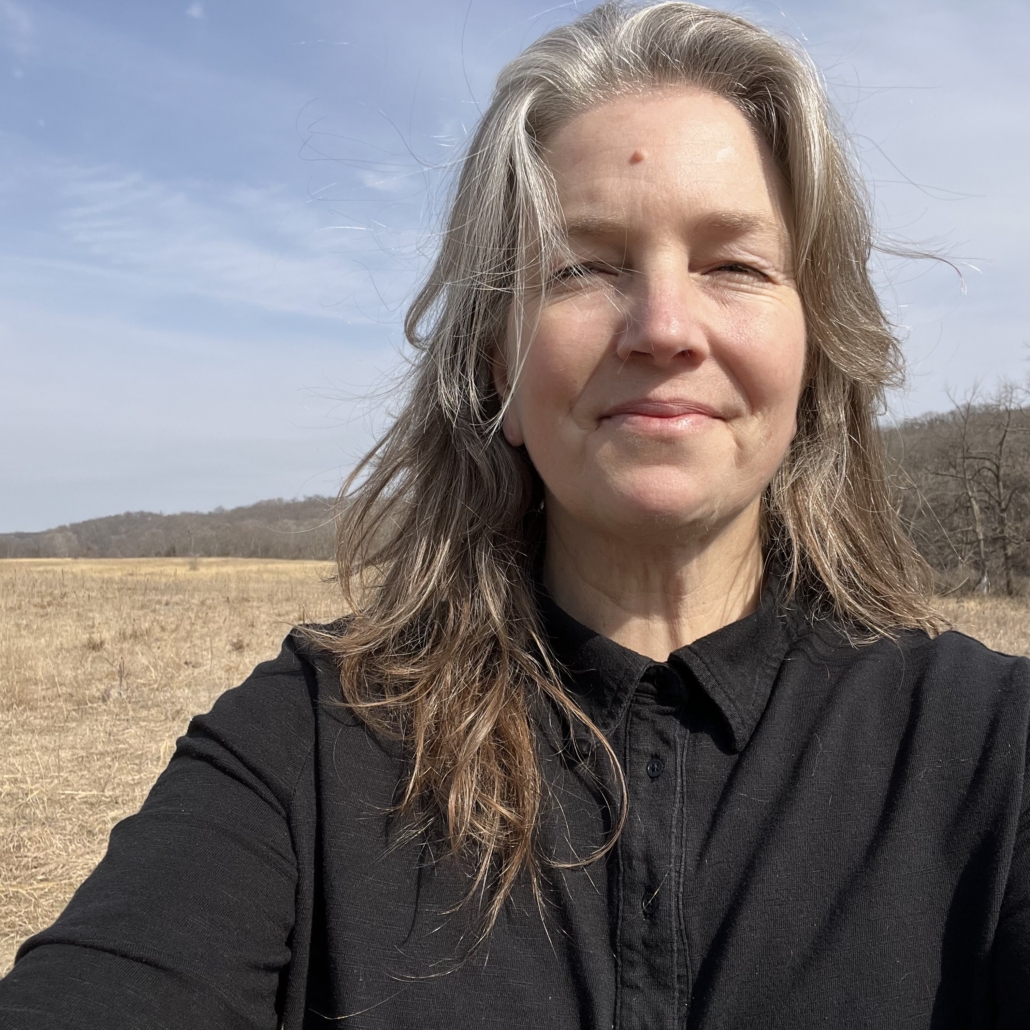
On June 3rd at the Neighborhood Print Studio, I interviewed Youth Workforce Director Beth Humphrey. She’s been working here for years, as far back as when I rejoined the Workforce in 2021. In that entire time, she’s been working to provide our youth with all manner of opportunities in our local creative world.
I asked Beth about her work here, in which there are many incredible components that serve the Youth Workforce. “It entails creating meaningful work for young people between the ages of 14 and 23. Meaningful work within our organization, giving them opportunities and paths and exposure to possibilities outside our organization.”
Such opportunities include working with different artists, galleries, and arts organizations. They also include art campus tours, curation, assisting in classes, and field trips. I know because I was a member of the Workforce for a long time!
“It wove together a lot of the work I’ve done in the past,” Beth told me in regards to her current position, “I’ve worked with youth, I’ve supervised youth, and I’ve advocated for young artists. I’ve been an education director, I’ve been a museum educator, I’ve been a teaching artist, and I’m a practicing artist. So this is a job that wove all of my stuff together in a big fat braid. [Beth laughs] It supported me being able to explore that position in a very open-ended way. It created more opportunities and more places to explore.”
I wanted to know more about Beth’s creative practice as an artist, which I was already somewhat familiar with due to her recurring work with The DRAW. However, there was a lot to understand about her finer inspirations. “My primary practice currently is that I create, through either printmaking, drawing or painting, low relief work that’s kind of adjacent to collage,” She told me, “The first pass is collage, but a lot of it ends up being more sculptural than what is traditionally considered collage. I build shapes and surfaces that I then assemble based on what the overarching ideas around the work are.
“Currently I’m thinking about how nature reclaims built spaces. Through the necessity, or from invasive species, or neglect, or human neglect of how to co-habitate with the natural world. That is what I’m thinking about when I make the work, but I don’t push that forward in the work. That’s one interpretation. I am interested in doing more sculptural work, returning to ceramic or possibly working with wood.”
Like with previous members of the staff I interviewed, I asked Beth what she believes makes her an artist. After some contemplation, she told me this: “I think it’s a perspective. It’s a way of interpreting the world. Like, it’s a necessity for me to interpret it in through my brain and out through my hands. Some people are musicians and they naturally feel the need to filter the world through music, instruments or their voice. I think everyone innately has this quality, it just matters if you activate it or feel comfortable with it. I feel like there’s lots of obstacles that happen, lots of voices in people’s heads that block some of the access that people have naturally. But mainly I think that it’s a way of interpreting what I see and feel.”
With how much Beth’s life has involved the community and its health in mind, I knew that she must have a very special connection to the community here in Kingston. When I asked her about it, she said, “I would say that there’s lots of ways that I feel like I’m integrating into this community. I don’t live here, I live in Saugerties. But I have had a pretty close relationship to midtown Kingston and also downtown, east Kingston. I first started to work with kids in this community about 20 years ago at JFK elementary school, through residencies, and getting to know the teachers there and getting to know the kids there, the families.
“Beyond being an artist and having shown in Kingston, I’ve lived there for 30 years so I’m involved in the art world, but I feel like I really got to know the community through working with the schools and working directly with kids and families. That was sort of my entry-level way of then getting to know teachers that worked with students in the ESL and ELL programs. I got to know Kai, many many years ago, through other ways besides working here. Art was like the first step in, and then my educational outreach was the next step there.
“Now, I feel like I see the community through the eyes of the Youth Workforce. They’re my conduit. How they see it is how I get to know about it, and my work here getting to know the people in the community. They’re my way, they’re my connectors.”
As the Youth Workforce Director, Beth has a special opportunity now to have a direct form of connection with young artists and their relationship to the world here. I asked her if she had a favorite moment during her time here that emphasized the strength of our community. “Here’s this one moment,” Beth explained, “It was 2 years ago. It was towards the end of the school year and I was with Joanna and Angel. They were graduating from high school and we had this great meeting. We were talking about their plans, their opportunities, how excited they were to leave school and go onto new things. They both had good experiences through their time as a member of the Youth Workforce, but then y’know, Joanna for example was wanting to go into medical arts. She was then armed with a sensitivity about art. Then Angel wanted to be an art teacher. So we had this great moment where we were taking these photos and talking about how they were moving on.
“Then I left and walked up to the YMCA to go swimming. There was like, all these senior women that were there, and somebody had grown a bunch of spinach or something and had a whole bunch of spinach to share. After that I went to the YMCA farm project to get some vegetables from the kids there, and it felt like this really special moment of these young people starting their lives either through us or through the farm project. Then there were these women that were sharing things that they grew with each other. It felt like it was bookending Kingston, in a way. I felt this really deep sense of the community that was here, and everybody had all different stories but in one day I could go from making art and talking about art with teenagers to talking about taking care of yourself and eating healthy food and buying fruits and vegetables from local teens. It just felt like, wow! Everything’s here! [Beth laughs] And we’re right here in the middle of it, we’re like in the eye of the storm. I also remember there was some kind of performance at UPAC and there were so many people going in to hear music. I thought ‘Wow, this is rich.’ It’s totally ordinary but it all felt really special.”
You can find out more about Beth Humphrey and her work at her Instagram account: @studiobeth. There, she posts more of her art and opportunities as well as her politics with great enthusiasm for amplifying advocacy.